
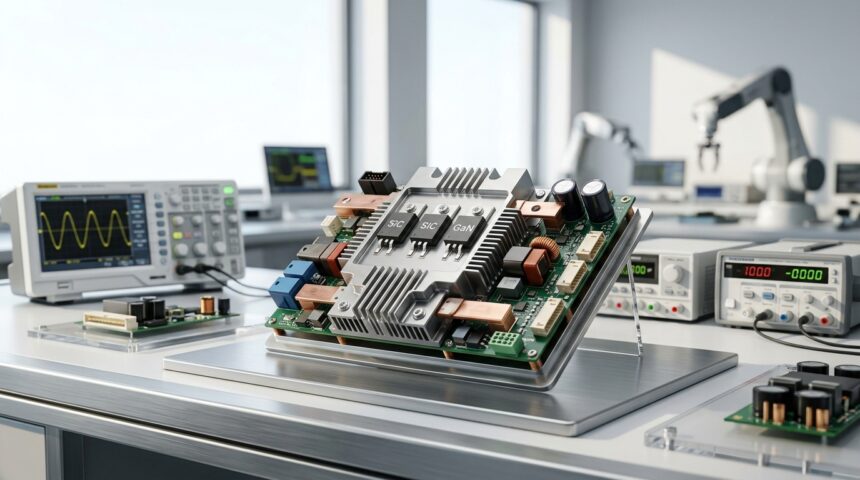
Imagine a world where electric cars charge in minutes, renewable energy powers entire cities without loss, and every electronic gadget runs twice as long on a single charge. This isn’t science fiction—it is the present and future being shaped by modern power electronics.
- 1. What is Power Electronics and Why Is It Revolutionizing Tech?
- 2. Breaking Down the Latest Trends in Power Electronics News
- 3. Power Electronics in the EV Revolution
- 4. Renewable Energy and Smart Grid Systems
- 5. Market Analysis: Key Industry Players and Growth
- 6. Challenges and Environmental Considerations
- 7. What Lies Ahead? Future Innovations to Watch
- Frequently Asked Questions (FAQs)
- Q1: Why is Silicon Carbide (SiC) better than Silicon in power electronics?
- Q2: How does power electronics impact renewable energy systems?
- Q3: Where can I find reliable power electronics news?
- Conclusion
If you have been keeping an eye on recent tech developments, staying updated with power electronics news has become essential. Power electronics is the invisible backbone of modern engineering, controlling and converting electrical energy efficiently. From silicon carbide (SiC) advancements to smart grids, the power sector is undergoing a massive transformation.
In this detailed article, we will break down the latest innovations, industry trends, market growth, and what the future holds for this vital technology.
1. What is Power Electronics and Why Is It Revolutionizing Tech?
At its core, power electronics is the application of solid-state electronics to the control and conversion of electric power. Unlike traditional electronics that handle data and signals, power electronics handles high currents and voltages.
Every time you plug in your phone, drive an electric vehicle (EV), or switch on a solar-powered appliance, power electronics is working behind the scenes.
Core Functions of Power Electronics:
- Rectification: Converting Alternating Current (AC) to Direct Current (DC).
- Inversion: Converting DC to AC (essential for solar inverters).
- DC-to-DC Conversion: Changing voltage levels for sensitive components.
- AC-to-AC Conversion: Controlling voltage and frequency for industrial motors.
Whenever you follow power electronics news, you’ll notice that efficiency is the primary goal. Reducing power loss during conversion means less heat generation, smaller devices, and lower carbon footprints.
2. Breaking Down the Latest Trends in Power Electronics News
The technological landscape is evolving rapidly. To understand where the industry is heading, let’s explore the top breakthrough trends recently highlighted across major power electronics news outlets.
+-----------------------------------------------------------------------+
|                   KEY POWER ELECTRONICS TRENDS                        |
+-----------------------------------------------------------------------+
|  1. Wide Bandgap Semiconductors (SiC & GaN replacing Silicon)         |
|  2. Smart Grids & Renewable Integration                               |
|  3. Next-Generation Electric Vehicle (EV) Powertrains                 |
|  4. AI & Edge Computing in Power Management                           |
+-----------------------------------------------------------------------+
The Rise of Wide Bandgap (WBG) Semiconductors
For decades, standard Silicon (Si) dominated semiconductor manufacturing. However, traditional silicon is reaching its physical limits in thermal efficiency and switching speed.
Enter Silicon Carbide (SiC) and Gallium Nitride (GaN). These Wide Bandgap materials can operate at higher voltages, temperatures, and frequencies.
- SiC is taking over high-voltage applications like EV traction inverters and heavy industrials.
- GaN is changing consumer fast-chargers, data centers, and 5G infrastructure due to its high switching speed and compact footprint.
3. Power Electronics in the EV Revolution
Electric Vehicles are currently the biggest growth driver for power semiconductors. Headlines in power electronics news frequently feature breakthroughs in EV batteries, fast chargers, and inverter technology.
       [ Power Source / Battery ]
                  │
                  ▼
       [ SiC Inverter / Converter ]  ◄── (Critical Efficiency Hub)
                  │
                  ▼
         [ Electric Motor ]
Fast Charging and 800V Architecture
Automakers are shifting from traditional 400V architecture to 800V systems. This transition allows EVs to:
- Charge faster: Up to 80% charge in 10–15 minutes.
- Reduce weight: Thinner cables can be used due to lower current requirements.
- Improve range: Highly efficient SiC MOSFETs reduce energy drain from the battery.
According to recent power electronics news reports, semiconductor companies are investing billions to scale up 200mm SiC wafer fabrication to meet the overwhelming automotive demand.
4. Renewable Energy and Smart Grid Systems
Transitioning away from fossil fuels requires a resilient energy grid. Solar panels and wind turbines produce variable electrical output that must be conditioned before feeding into the power grid.
Solar and Wind Energy Integration
Solar panels generate DC power, while the grid runs on AC. Solar inverters utilize high-power IGBTs (Insulated Gate Bipolar Transistors) and SiC modules to convert DC to AC with over 98% efficiency.
Solid-State Transformers (SSTs)
One of the most exciting updates in power electronics news is the development of Solid-State Transformers (SSTs). Unlike conventional bulky transformers, SSTs offer:
- Smart bidirectional power flow.
- Active voltage regulation.
- Compact size and seamless integration with battery energy storage systems (BESS).
5. Market Analysis: Key Industry Players and Growth
The global power electronics market is projected to reach over $50 Billion in the coming years, driven by sustainable energy initiatives and industrial automation.
| Top Market Leaders | Core Focus Areas | Key Semiconductor Tech |
| Infineon Technologies | Automotive, Industrial Power | SiC, GaN, IGBTs |
| STMicroelectronics | EV Inverters, Smart Power | Silicon Carbide (SiC) |
| Texas Instruments | Analog & Embedded Processing | GaN Integrated Power |
| Wolfspeed | Pure-play SiC Wafer & Devices | Silicon Carbide Wafers |
| ON Semiconductor (onsemi) | Intelligent Power & Sensing | SiC Power Modules |
Engineers and investors actively monitor power electronics news to track mergers, acquisitions, and technology breakthroughs among these market giants.
6. Challenges and Environmental Considerations
While the industry’s future looks promising, several challenges persist:
- Supply Chain Bottlenecks: Manufacturing raw SiC substrates is complex, slow, and expensive compared to standard silicon.
- Thermal Management: As power density increases in smaller chips, heat dissipation requires innovative liquid cooling and advanced packaging materials.
- E-waste and Recycling: Discarded power modules contain heavy metals and rare elements that necessitate clean recycling protocols.
Addressing these issues remains a reoccurring topic in power electronics news journals, pushing researchers toward more sustainable manufacturing methods.
7. What Lies Ahead? Future Innovations to Watch
Looking into the next decade, power conversion will become smarter, smaller, and vastly more integrated.
- AI-Optimized Power Supplies: Machine learning algorithms will predict load demands and adjust switching frequencies in real time to maximize energy savings.
- Gallium Oxide ($\text{Ga}_2\text{O}_3$): An ultra-wide bandgap material currently in research stages, offering even higher efficiency than SiC and GaN.
- Wireless Power Transfer: High-frequency power electronics will enable efficient mid-air charging for medical implants, drones, and moving EVs.
Staying connected with updated power electronics news ensures engineers, business leaders, and tech enthusiasts remain ahead of these game-changing shifts.
Frequently Asked Questions (FAQs)
Q1: Why is Silicon Carbide (SiC) better than Silicon in power electronics?
Ans: Silicon Carbide handles much higher voltages and operating temperatures while suffering significantly lower power losses during fast switching. This makes devices smaller, lighter, and far more efficient.
Q2: How does power electronics impact renewable energy systems?
Ans: Solar panels and wind turbines produce variable DC or AC power. Power electronics convert and stabilize this energy into precise grid-compatible AC power, ensuring energy isn’t wasted during transmission.
Q3: Where can I find reliable power electronics news?
Ans: You can follow leading engineering publications, official releases from top semiconductor companies (like Infineon, STMicroelectronics, and Wolfspeed), IEEE journals, and dedicated industry portals.
Conclusion
Power electronics is no longer just a sub-field of electrical engineering—it is the engine driving our transition to a cleaner, smarter, and more electrified future. From high-speed electric transportation and renewable microgrids to daily consumer devices, innovations in this space are fundamentally reshaping technology.
By regularly reading power electronics news, you gain insights into the breakthrough materials and smart power architectures that keep our modern world running efficiently. The transition to SiC, GaN, and AI-driven energy management is just the beginning of a greener electrical revolution.
