
Introduction
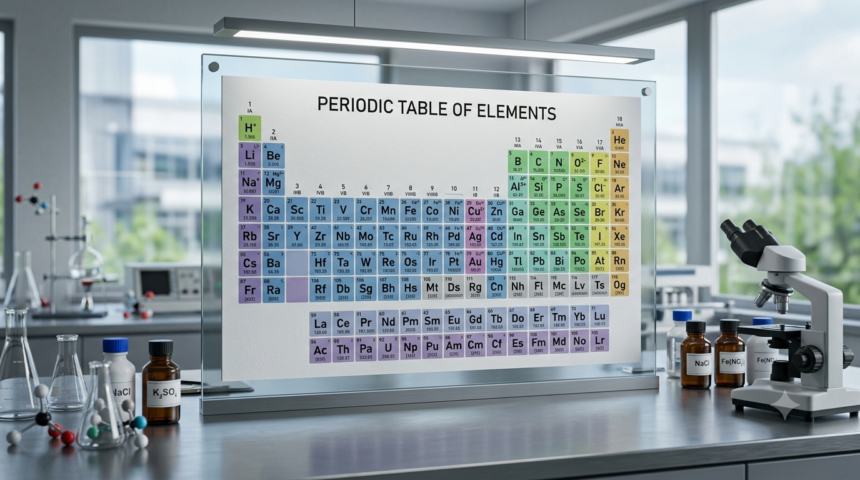
The periodic table with charges is one of the most useful tools for chemistry students, teachers, and science enthusiasts. While the standard periodic table shows element names, symbols, atomic numbers, and atomic masses, a version that includes common ionic charges makes learning chemical reactions much easier.
- Introduction
- Group 1: Alkali Metals
- Group 2: Alkaline Earth Metals
- Group 13
- Group 14
- Group 15
- Group 16
- Group 17: Halogens
- Group 18: Noble Gases
- Learn by Groups
- Practice Writing Compounds
- Use Flashcards
- Solve Practice Questions
- Memorize the Main Groups
- Focus on Common Transition Metals
- Practice Balancing Charges
- Review Every Week
- What is the most common charge of Group 1 elements?
- Why do halogens have a −1 charge?
- Do transition metals always have one charge?
- Why are noble gases usually uncharged?
- Is learning ionic charges necessary for chemistry?
Knowing the common charges of elements helps you predict how atoms combine, write chemical formulas correctly, and understand ionic bonding. Whether you’re preparing for school exams, college entrance tests, or simply improving your chemistry knowledge, understanding ion charges is an essential skill.
In this guide, we’ll explain what ionic charges are, why they matter, how they relate to the periodic table, and the common charges of different element groups. By the end, you’ll have a clear understanding of how to use the periodic table effectively.
What Is a Periodic Table with Charges?
A periodic table with charges is a modified version of the traditional periodic table that displays the most common ionic charge of each element.
An ionic charge shows how many electrons an atom gains or loses to become stable. Atoms naturally try to achieve a full outer electron shell, and this process creates positively or negatively charged ions.
For example:
- Sodium (Na) usually forms a +1 ion.
- Magnesium (Mg) commonly forms a +2 ion.
- Chlorine (Cl) typically forms a −1 ion.
- Oxygen (O) usually forms a −2 ion.
These charges help predict how elements combine to form compounds.
Why Are Ionic Charges Important?
Understanding ionic charges is essential because they make writing and understanding chemical formulas much easier.
Some important reasons include:
- Predicting chemical reactions.
- Writing balanced chemical equations.
- Understanding ionic compounds.
- Learning chemical bonding.
- Solving chemistry exam questions quickly.
Without knowing common charges, creating correct formulas like NaCl, MgO, or CaCl₂ becomes much more difficult.
Understanding Positive and Negative Charges
Atoms become charged by either losing or gaining electrons.
Positive Ions (Cations)
When an atom loses electrons, it becomes positively charged.
Examples include:
- Na⁺
- K⁺
- Ca²⁺
- Mg²⁺
- Al³⁺
Metals usually form positive ions.
Negative Ions (Anions)
When atoms gain electrons, they become negatively charged.
Examples include:
- Cl⁻
- Br⁻
- O²⁻
- S²⁻
- N³⁻
Nonmetals generally form negative ions.
Common Charges by Periodic Table Groups
One of the easiest ways to remember charges is by learning the common charges of each group.
Group 1: Alkali Metals
These elements lose one electron.
Common charge:
+1
Examples:
- Lithium (Li)
- Sodium (Na)
- Potassium (K)
- Rubidium (Rb)
- Cesium (Cs)
Group 2: Alkaline Earth Metals
These elements lose two electrons.
Common charge:
+2
Examples:
- Beryllium (Be)
- Magnesium (Mg)
- Calcium (Ca)
- Strontium (Sr)
- Barium (Ba)
Group 13
Most elements here form:
+3
Examples:
- Aluminum (Al)
- Gallium (Ga)
Aluminum is especially important because it almost always forms a +3 ion.
Group 14
This group is more complicated.
Possible charges include:
- +4
- -4
Carbon usually shares electrons instead of forming simple ions.
Group 15
These elements often gain three electrons.
Common charge:
−3
Examples:
- Nitrogen (N)
- Phosphorus (P)
Group 16
These elements gain two electrons.
Common charge:
−2
Examples:
- Oxygen (O)
- Sulfur (S)
- Selenium (Se)
Group 17: Halogens
Halogens gain one electron.
Common charge:
−1
Examples:
- Fluorine (F)
- Chlorine (Cl)
- Bromine (Br)
- Iodine (I)
Group 18: Noble Gases
Noble gases already have complete outer electron shells.
Common charge:
0
Examples:
- Helium (He)
- Neon (Ne)
- Argon (Ar)
They rarely form ions under normal conditions.
Transition Metals and Variable Charges
Unlike main-group elements, transition metals often have multiple oxidation states.
Some common examples include:
| Element | Common Charges |
|---|---|
| Iron (Fe) | +2, +3 |
| Copper (Cu) | +1, +2 |
| Chromium (Cr) | +2, +3, +6 |
| Nickel (Ni) | +2, +3 |
| Cobalt (Co) | +2, +3 |
| Mercury (Hg) | +1, +2 |
Because transition metals can have different charges, Roman numerals are often used in compound names.
Example:
- Iron(II) oxide
- Iron(III) oxide
How to Remember Periodic Table Charges Easily
Many students find ionic charges difficult at first, but a few simple tricks make memorization easier.
Learn by Groups
Elements in the same group usually have similar charges.
Practice Writing Compounds
Examples include:
- NaCl
- MgO
- CaF₂
- Al₂O₃
Writing formulas repeatedly improves memory.
Use Flashcards
Write the element on one side and its common charge on the other.
Solve Practice Questions
The more chemistry problems you solve, the more natural the charges become.
Examples of Ionic Compounds
Here are some common ionic compounds and the charges involved.
| Compound | Positive Ion | Negative Ion |
| Sodium Chloride | Na⁺ | Cl⁻ |
| Magnesium Oxide | Mg²⁺ | O²⁻ |
| Calcium Chloride | Ca²⁺ | Cl⁻ |
| Aluminum Oxide | Al³⁺ | O²⁻ |
| Potassium Bromide | K⁺ | Br⁻ |
| Lithium Fluoride | Li⁺ | F⁻ |
Notice that the total positive and negative charges always balance.
Difference Between Ionic Charge and Oxidation Number
Many beginners confuse ionic charges with oxidation numbers.
Although they are related, they are not always identical.
Ionic Charge
- Represents the actual charge on an ion.
- Used mainly for ionic compounds.
Oxidation Number
- Represents electron distribution in compounds.
- Used in oxidation-reduction reactions.
- Can vary depending on the compound.
Understanding this difference becomes important in advanced chemistry.
Tips for Using the Periodic Table During Exams
Students can improve their performance by following these simple tips.
Memorize the Main Groups
Groups 1, 2, 13, 15, 16, and 17 follow predictable charge patterns.
Focus on Common Transition Metals
Learn the most frequently tested metals like iron, copper, silver, zinc, and chromium.
Practice Balancing Charges
Always ensure that the total positive and negative charges cancel each other.
Review Every Week
Short, regular practice sessions are more effective than last-minute studying.
Common Mistakes Students Make
Avoid these frequent errors:
- Confusing atomic number with ionic charge.
- Assuming all metals have only one charge.
- Forgetting that noble gases usually have zero charge.
- Writing chemical formulas without balancing charges.
- Mixing oxidation numbers with ionic charges.
Recognizing these mistakes early helps build a stronger foundation.
Applications of Ionic Charges in Everyday Life
Understanding ionic charges is useful beyond the classroom.
Examples include:
- Water purification.
- Battery technology.
- Medical electrolytes.
- Industrial chemical production.
- Fertilizers.
- Food preservation.
- Pharmaceutical manufacturing.
Scientists, engineers, pharmacists, and laboratory technicians rely on ionic charges every day.
Frequently Asked Questions (FAQs)
What is the most common charge of Group 1 elements?
Group 1 elements usually have a +1 charge because they lose one electron.
Why do halogens have a −1 charge?
Halogens need one extra electron to complete their outer shell, so they commonly form −1 ions.
Do transition metals always have one charge?
No. Many transition metals can form multiple ionic charges depending on the chemical reaction.
Why are noble gases usually uncharged?
Their outer electron shells are already complete, making them naturally stable.
Is learning ionic charges necessary for chemistry?
Yes. Understanding common charges is one of the foundations of chemistry because it helps explain bonding, reactions, and compound formation.
Conclusion
Learning the periodic table with charges makes chemistry much easier to understand. Instead of memorizing every chemical formula individually, you can predict how elements combine simply by knowing their common ionic charges. Main-group elements follow clear patterns, while transition metals require a little extra practice because they often have multiple charges.
Whether you’re a beginner or preparing for advanced exams, mastering ionic charges will improve your confidence in writing formulas, balancing equations, and understanding chemical reactions. With regular practice and a good understanding of periodic trends, you’ll find chemistry far more logical and enjoyable.
